
















|

Eye of the Strom:
Interview with Yale Strom
By Carin Chea
Multidisciplinary artist Yale Strom is the ultimate modern-day Renaissance man. He is an ethnographer, documentary filmmaker, world-renowned violinist, and a captivating author.
Perhaps most notable is Strom’s genuine care and compassion for the marginalized, especially cultures and traditions on the brink of being lost.
Through storytelling, the author has been able to preserve and revive the historical brilliance of groups whose narratives were beginning to fade.
Most notable is this: To know Yale Strom is to have met the world in all its richness, depth, and complexities.
Contrary to the adage, Strom is actually a master of many trades. And, this is not just because he has grit and perseverance (which, as you will soon read, he does).
Strom is an unending fountain of knowledge because he is compassionate and he is equipped with the ability to not just hear people’s stories, but to make them feel truly seen and understood.
To meet Strom is to have the world’s richness at your fingertips, but to have your story told by him is truly a privilege.
You are a writer, musician, filmmaker, and renowned scholar. What came first?
When I was eight years old, growing up in Detroit, a woman who to me looked a hundred years old named Mrs. Baker came into our third-grade classroom and took students out one at a time for a music aptitude test. The test was simple: I stood beside her piano and sang back every note she played.
A few days later, she handed me a paper to take home to my parents. I gave it to my mother and, while I was in the kitchen getting a snack, she read it aloud.
The letter explained that I had scored 100% on the test, correctly singing back every note I heard.
Because of that, Mrs. Baker offered to give me free violin lessons once a week if my parents would pay the $25 monthly rental fee for the violin. Every Thursday, I would be taken out of class for a half hour for my lesson.
Well, as any astute eight-year-old would, the only thing I really heard was: “Yale will be taken out of class every week for half an hour.” So I immediately said, “Yes, I’ll take violin lessons!”
Of all the artistic mediums I work in professionally (writing, filmmaking, scholarship, and music) music came first and has remained the most influential in my life.
I often tell audiences around the world during lectures that if Mrs. Baker had taught the duda (the Belarusian bagpipe) I might be standing before them today playing the duda instead of the violin.
You never know how something as simple as offering a young person the chance to learn an instrument can lead them down a lifelong path of discovery, creativity, and storytelling.
Tell us about your strong connection to klezmer music and how it has influenced your work.
My connection to klezmer music began long before I understood what the word “klezmer” even meant.
Growing up in Detroit, I heard fragments of Eastern European Jewish culture through family stories and gatherings, as well as from music such as Stoliner Khasdic songs, Yiddish folk songs, union songs, Blues, jazz, and classical music my parents played on our stereo.
But it was not until I began traveling extensively through Eastern Europe in the early 1980s that I realized an entire musical world was disappearing before our eyes.
I spent years interviewing elderly Jewish and Romani musicians in places such as Poland, Ukraine, Hungary, Romania, former Yugoslavia, and Moldova. Many of these musicians had performed before World War II.
I carried a violin, a tape recorder, notebooks, and a camera, documenting melodies, stories, dialects, customs, and memories that otherwise might have vanished forever.
These musicians taught me that klezmer music is much more than entertainment; it is a living archive of Jewish history, emotion, spirituality, humor, tragedy, and survival.
What deeply moved me was how klezmer music could express the entire range of human experience. In one tune, there could be joy, sorrow, longing, irony, prayer, and celebration all at once.
The violin, especially, seemed to imitate the human voice – the cry of a cantor, the laughter at a wedding, or the lament of exile. That emotional depth profoundly shaped me not only as a musician but also as a writer, filmmaker, and ethnographer.
Klezmer has influenced every aspect of my creative work. In my novel, documentaries, lectures, photographs, and compositions, I try to preserve and convey the voices and memories of the people I encountered during my travels.
The rhythm and structure of klezmer music even influence the way I wrote my first novel, where I am moving between comedy and heartbreak, memory and improvisation, much like a klezmer performance itself.
For me, klezmer is not simply a musical genre; it is a doorway into the history and resilience of Eastern European Jewish life.
It reminds us that even after displacement, persecution, and loss, culture can survive through melody, storytelling, and human connection.
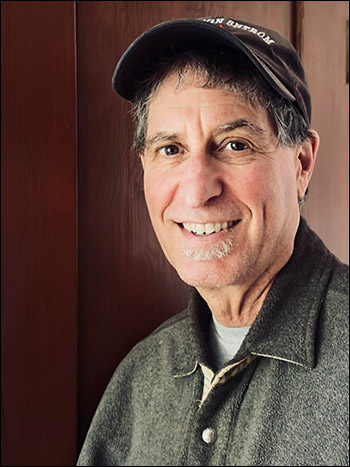
Some have described you as a “maverick” and a “Yiddish Indiana Jones.” Tell us about your journey into becoming such a pioneer in your field.
Well, traveling throughout the former Eastern Bloc during the 1980s was truly an adventure. The border authorities almost always looked suspiciously at me.
Here I was: a young American carrying cameras, lenses, batteries, cassette tapes, a tape recorder, notebooks, very few clothes, and a violin. To them, I must have looked either like a spy or completely insane.
Often, at border crossings, the police demanded that I prove I was actually a violinist. At that time, there were Western buyers crossing into Eastern Europe, purchasing valuable violins from poor villagers and then reselling them in the West for enormous profits. The authorities assumed I might be one of them.
Fortunately, before entering each country where I planned to conduct my klezmer ethnographic research, I memorized two well-known folk tunes from that country. So when the guards handed me the violin and ordered me to play, I usually managed to convince them after an hour or two of interrogation that I was genuinely a musician and researcher.
Still, the bureaucracy could be overwhelming. If a visa stamp was missing, a passport was not signed correctly, or I lacked the required local police registration papers, I could easily be detained or arrested.
I was never especially worried about my personal safety. What concerned me most were the materials I was collecting: I collected field recordings, photographs, documents, and memorabilia from elderly Jewish and Romani musicians whose memories and traditions were disappearing.
Only once was I actually arrested inside a country rather than at the border, and ironically, it happened in the small Romanian town of Dorohoi. It was an exceptionally brutal winter, and one day I wandered into a museum simply to get warm.
To my amazement, I discovered it was the childhood home of the great Romanian composer and violinist George Enescu.
Not long afterward, the local police arrested me because I had been photographing old synagogues, including one that was in the process of being torn down. They separated me from my backpack, violin, camera, and tapes while officers searched through my belongings.
As I sat there waiting, I noticed the walls of the police room were covered floor to ceiling with Playboy and Penthouse centerfolds. Suddenly, I realized where all the confiscated “illegal Western magazines” had ended up.
Looking back, those experiences taught me that preserving culture often requires crossing borders both literal and psychological.
At the time, I never thought of myself as a pioneer or a “Yiddish Indiana Jones.” I was simply driven by the feeling that the music, stories, and memories I was documenting were vanishing, and if someone did not preserve them, they might disappear forever.
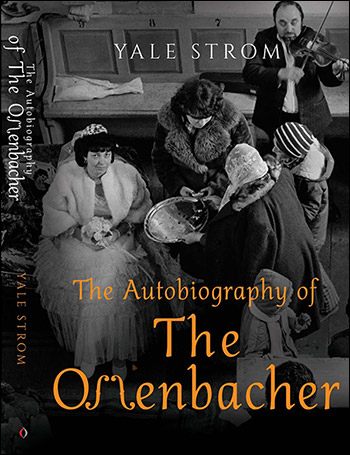
You are a prolific author. Could you tell us more about your upcoming novel, The Autobiography of the Offenbacher?
Up until writing The Autobiography of the Offenbacher, all of my books—fifteen in total—had been nonfiction works rooted in history, ethnography, music, and documentary research.
The only fictional works I had previously written were three illustrated children’s books inspired by my Eastern European Yiddish ethnographic research. So writing an adult historical novel was truly a giant leap into the unknown for me.
Some people, over the years, have criticized me for not focusing on just one artistic medium. They would ask, “Why not simply remain a musician?” or “Why move between film, scholarship, photography, theatre, and writing?” But I have always believed creativity should not be confined by the expectations of others.
Part of the reason I wanted to write this novel was to challenge myself artistically and to explore whether the same stories and emotions I had documented through music, film, plays, and historical research could also live through fiction.
The Autobiography of the Offenbacher grew organically out of decades of travel and research throughout Eastern Europe.
During my ethnographic journeys, I encountered elderly Jewish musicians, Holocaust survivors, Romani artists, cantors, storytellers, and ordinary people whose lives contained extraordinary histories.
Many of their voices, memories, humor, fears, and philosophies found their way into the spirit of this novel.
At its heart, the book explores the universal power of music and memory. I have long believed that music transcends language, politics, borders, and even time itself. In many ways, the novel reflects that belief.
The characters live through periods of immense upheaval and displacement, yet music becomes a thread that connects identity, survival, love, and remembrance.
The novel is also deeply influenced by Yiddish culture and storytelling traditions, where tragedy and humor often exist side by side. Much like klezmer music itself, the story moves between joy and heartbreak, irony and resilience.
I wanted readers not only to experience history intellectually, but to feel emotionally immersed inside that vanished world.
Writing fiction also allowed me a kind of freedom that nonfiction does not always permit.
As a historian and documentarian, one is bound to facts and verifiable evidence. But as a novelist, I could enter the inner emotional lives of characters, imagine conversations, dreams, fears, and moments that history books rarely capture.
In many ways, the novel became another form of ethnography, only this time through imagination and narrative storytelling.
For me, The Autobiography of the Offenbacher represents the culmination of decades of artistic and scholarly work. It brings together music, history, Yiddish culture, memory, travel, and storytelling into a single creative work.
What inspired this novel? Is historical fiction one of your favorite genres of writing?
One of the inspirations for The Autobiography of the Offenbacher came many years ago when I first read The Magician of Lublin by Isaac Bashevis Singer and later saw the film adaptation.
What stayed with me most were the vivid scenes of the carnivals and marketplaces where Jews, Roma, and local Poles gathered together to buy and sell goods, exchange gossip and news, eat, drink, flirt, argue, and above all listen to music.
Those gatherings represented a living crossroads of cultures and traditions that once flourished throughout Eastern Europe.
I was especially fascinated by the klezmer musicians who performed at these fairs and festivals.
Klezmer music had the power to draw enormous crowds because it spoke directly to people’s emotions. It could make listeners laugh, dance, cry, reminisce, or fall in love all within the same performance.
As both a musician and an ethnographer, I became deeply interested in the world of these wandering Jewish musicians and the multicultural environments in which they lived and performed.
During my own travels throughout Eastern Europe, I often encountered echoes of that vanished world. Elderly villagers would describe market days and weddings where Jewish, Roma, Ukrainian, Polish, Hungarian, Ruthenian, or Romanian musicians all played side by side.
Those stories stayed with me for decades and eventually became part of the emotional landscape of the novel.
Historical fiction has always appealed to me because it allows a writer to enter history not only through facts, but through atmosphere, memory, emotion, and imagination.
As a historian and documentarian, I spent much of my life preserving real voices and real events. But fiction offered me the opportunity to explore the inner emotional truths behind those histories, the fears, humor, dreams, and contradictions that official documents often cannot capture.
What I especially love about historical fiction is its ability to resurrect lost worlds. Through storytelling, readers can step into a vanished shtetl, hear the sounds of a klezmer band drifting through a marketplace, smell the food cooking at a carnival, or feel the tension and uncertainty of life in Eastern Europe during times of enormous change.
In many ways, that is what I hoped to accomplish with The Autobiography of the Offenbacher: not simply to tell a story, but to bring an entire cultural world back to life.
If your book were adapted for the big screen, who would play the main characters?
Well, I know to stay in my lane when it comes to “Hollywood casting.” I think readers often have their own vivid ideas about who the characters are and what they look and sound like, and sometimes those interpretations are more interesting than anything an author could impose.
That said, if The Autobiography of the Offenbacher were ever adapted for the screen, my instinct would be to cast actors from Eastern Europe, particularly performers who truly understand the cultural atmosphere and emotional texture of that world.
Most importantly, I would want actors who can actually play the violin. Since music is at the very heart of the novel, authenticity would matter tremendously to me.
There is nothing more distracting than watching an otherwise wonderful actor awkwardly fake playing an instrument. Audiences can sense immediately when the physical relationship between the musician and the violin is false.
A real violinist holds the instrument differently, breathes differently, and moves differently. The body itself becomes part of the music.
I would especially love to see young actors and musicians from countries such as Poland, Romania, Hungary, Ukraine, or Moldova involved in such a project because the story itself emerges from that cultural landscape.
Many extraordinary classically trained and folk musicians from Eastern Europe possess not only the technical ability to play the music authentically, but also an instinctive understanding of the emotional nuances behind klezmer and Eastern European folk traditions.
Of course, film is a collaborative art, and directors often see possibilities the author never imagined. But for me, the music would have to feel absolutely real. The violin in the novel is not simply a prop. It is a character in itself, carrying memory, history, tragedy, and joy across generations.
Are there any upcoming events or projects you’d like us to know about?
I am almost always working on several projects simultaneously, because for me, music, writing, filmmaking, and research all feed one another creatively. But there are two current projects I am especially excited about.
The first is a musical I have been creating with my longtime writing partner, Todd Salovey, about the lives of Bella and Marc Chagall. We will be doing a detailed workshop presentation during the first week of October at San Diego State University.
The project has been an extraordinary artistic journey because Chagall’s life and artwork are already so musical, emotional, and dreamlike in spirit.
For the production, I have written eighteen original songs, and interestingly, they are not all Yiddish or klezmer inspired. In fact, only one or two songs contain Yiddish lyrics.
Musically, the score moves through many styles of Broadway-influenced musical theatre, jazz, classical, folk, and even contemporary sounds. I wanted the music to reflect the emotional and artistic worlds Bella and Marc Chagall inhabited: the village life of Eastern Europe, the avant-garde artistic circles of Paris, exile, memory, love, and imagination.
The challenge has been finding a musical language expansive enough to capture both the intimacy and the surreal beauty of Chagall’s vision.
The other major project I am working on is a documentary film with my wife and longtime producer, Elizabeth Schwartz. The documentary explores the life and legacy of Moses Asch, the founder of the historic and groundbreaking Folkways Records label, now part of Smithsonian Folkways.
What fascinates me about Moe Asch is how this Polish Jewish immigrant helped shape the soundscape of America.
Through Folkways, he recorded and preserved an astonishing range of voices and traditions: folk music, blues, labor songs, jazz, spoken word, Indigenous music, world music, political recordings, children’s songs, and field recordings from countless communities.
In many ways, Folkways gave America’s diversity a soundtrack. Moe Asch believed that every culture and every human voice deserved to be documented and preserved, whether commercially profitable or not.
That philosophy deeply resonates with my own work as an ethnographer and documentarian.
Both projects, although very different, are ultimately about memory, culture, identity, and the power of art to preserve human experience across generations.
For more information, please visit www.YaleStrom.com
Home |
Actors/Models |
Art |
Books |
Dining
Film & Video |
Food & Wine |
Health & Fitness
MediaWatch |
Money and Business |
Music |
Profiles
Professional Services |
Sports |
Style & Fashion
Technology |
Theatre |
Travel & Leisure
Copyright 1995 - 2026 inmag.com
inmag.com (on line) and in Magazine (in print)
are published by in! communications, Inc.
www.inmag.com
|


Advertiser Info
Subscription Form
Contact Us
|

