
















|

From "Banana" to Asian American Writer: David Mura on Race, Identity, and the Stories
Whiteness Tells Itself
An Interview with David Mura, Author of Exit Miss Saigon
By Sylvia Delgado
For most of his life, David Mura wanted to be white.
Growing up as a "banana—yellow on the outside, white on the inside," he consumed the Anglo-American literary canon in his English Ph.D. program without ever reading a Black writer, never learning about his own parents' incarceration during WWII, never questioning the narratives that taught him his face didn't belong in America.
It wasn't until his late twenties, standing in a bookstore reading Frantz Fanon's Black Skin, White Masks, that everything shattered. "Oh expletive, that's what I've been doing," he realized.
He had been taught self-alienation, self-hatred, and identification with a culture that would never fully accept him.
In his powerful new book, Exit Miss Saigon, Mura—a Guggenheim Fellowship recipient, Emmy-winning documentarian, and author of the memoirs Turning Japanese and Where the Body Meets Memory—traces his journey from denial to revelation.
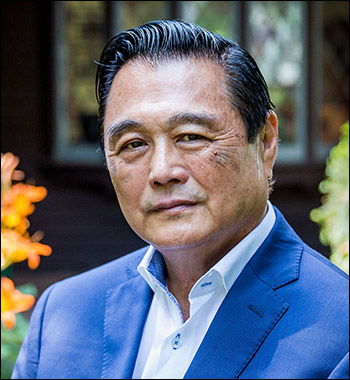
Drawing on Black writers like James Baldwin and Toni Morrison, feminist theory, and psychoanalysis, Mura examines how racial stereotypes shape everything from sexual attraction hierarchies to mental health to Asian American masculinity.
From Miss Saigon's yellowface casting to Steve Harvey's jokes about Asian men being unattractive, from BTS to pornography to the racialized hierarchies on Tinder, Mura dissects the stories whiteness tells itself—and offers Asian Americans a path toward seeing themselves clearly, accepting their bodies and experiences, and refusing to give power to people who can't see them.
The following is an interview with David Mura on his journey and his new book, Exit: Miss Saigon.
You describe yourself as growing up wanting to be white—a "banana: yellow on the outside, white on the inside." What was the specific moment or realization that shattered that identity and set you on the path to becoming an Asian American writer?
In my late twenties, one day in a bookstore, I picked up Black Skin White Masks, by the Black Martinique psychiatrist and revolutionary, Frantz Fanon. In this book, Fanon explores the psychological effects of racism on both whites and Blacks.
In one passage, he describes the Black schoolchildren in the Martinique French colonial school system: These Black students were reading history texts about "our ancestors" the Gauls and how the great white hunters and explorers conquered Africa and brought civilization to the savages there.
What is the Black school child learning, observes Fanon, but self-alienation, self-hatred and an identification with their colonial ruler?
When I read that passage, I had an immediate epiphany, "Oh expletive, that's what I've been doing." I realized that I had been in denial about my racial identity: I was not white and I would never be white. So who the hell was I? What did it mean that I was Japanese American?
Back then, I had attended an English Ph.D. program where I read through the Anglo-American canon and never read any Black writers. But once I began reading writers like James Baldwin, Toni Morrison, and Alice Walker I found in them a language to talk about race, a language that was completely absent from any of the white writers I'd read in grad school.
Though I wasn't Black, I saw that that language could help me unlock and investigate my own ethnic and racial identity.
Your parents were incarcerated as teenagers during WWII, yet their response was to abandon their Japanese roots and assimilate into white middle-class America. The book spans from their incarceration to anti-Asian hate crimes during Covid to the Harvard admissions controversy. How do you see the through-line connecting these seemingly disparate moments in Asian American history?
There are various ways in which Asian Americans are never considered true Americans. I'll be golfing and someone will ask me where I'm from and if I answer Chicago, they'll go, "No, where are you really from?"
My grandfather came here from Japan in 1898, over a hundred and twenty-five years ago, and people still think I'm not from America.
During Covid, a reporter came up to me at the Mall of America and asked me how my relatives in China were reacting to the pandemic.
Imagine if you went up to any white person at the mall and asked them how their relatives back in Europe were reacting to the Russian-Ukraine war. But of course, this would never happen.
Beyond this, any time America engages in a war or political clashes with a country in East Asia, all East Asian Americans, no matter our ethnicity, automatically become a focus of suspicion; we're viewed as a perpetual and potential fifth column threat.
This racist trope led to my parents being imprisoned during WWII, to attacks on Asians during the auto crisis in the 1980s and to attacks on our communities during Covid.
So how does the Harvard admissions case fit with these racial stereotypes? Asian Americans score highest as a group in board scores and grades; they score the lowest in personality, character and leadership.
But such an evaluation never asks: If we Asians Americans are not viewed as a legitimate part of America, wouldn't that affect whether people see us as leaders?
If white Americans can't see us as individuals or can't tell us apart, what does that say about their evaluations of our character or leadership abilities? When anyone asserts that because of our culture, we Asians are followers and not leaders, I always want to ask, well, who is leading Asia?
You write that it was reading Black authors that first opened your eyes to an alternative identity you hadn't explored. Who were those authors, and what did they teach you about being Asian American that you couldn't learn anywhere else?
In The Devil Finds Work, James Baldwin examines American history and American movies from the perspective of Black people.
He argues that the history we learn in schools or in movies leaves out the experiences of Black people—and by implication other people of color.
Beyond this, our images of American history are filled with lies, omissions, distortions and myths. And this is not just with Black history. I never learned about the imprisonment of Japanese Americans in school, nor did my children.
In my recent book, The Stories Whiteness Tells Itself: Racial Myths and Our American Narratives, just as Baldwin did, I examine the white versions of our history in nonfiction and fiction and compare them with the Black versions of that same history.
In that book I link that history with the police murders of Philando Castile and George Floyd, both of which took place a few miles from my home in Minneapolis.
Today, in America, we are again seeing an attempt to erase the histories of Black people and other people of color; that's part of what the attacks on DEI are about.
But the history of Black people and people of color in this country belongs to all of us and it involves all of us; just as importantly, Black history tells as much about white people and their history as it does about Black people.
Your article in Mother Jones about Miss Saigon and yellowface casting led to a permanent break with white artist friends. What was in that article that made reconciliation impossible, and what did losing that community teach you about the cost of speaking truth about race?
In the original Broadway version of Miss Saigon, the white Brit Jonathan Pryce played a Eurasian. But none of my white friends could understand why I was upset about this yellowface casting. Nor were they interested in the racial stereotypes that undergird this musical.
Of course, none of these white friends would get up today in public and defend yellowface casting. But back in the day, they regarded me as someone who was making too big a fuss about race; some even asked if I was becoming a racial separatist and if I was going to divorce my white wife!
But when I spoke at colleges, the things I was saying about race that upset my white friends had the exact opposite effect on students of color.
Not just Asian American students, but Black, Latino, and Indigenous students would thank me from what I was saying, thank me for affirming their experiences and the racism they had faced.
And as I began to make connections with writers and artists from other communities of color, I realized I wasn't alone.
Gradually I understood that I couldn't be friends with people who did not see who I was, who wanted me to be a quiet Asian who never brought up the issues of race.
I realized that part of the price of my writing about race would be criticism and rejection from white people—but I also knew that the same opposition had confronted the Black writers I admired like James Baldwin and Toni Morrison. And their fortitude in the face of such criticism bolstered me, just as I had bolstered the students of color I spoke to at colleges.
You created a performance piece with Black novelist Alexs Pate about the Rodney King decision and the need for cross-racial BIPOC coalitions. What did that collaboration reveal about building solidarity across communities of color, and why do you argue against recent Asian American authors like Wesley Yang and Jay Caspian Kang who seem skeptical of these coalitions?
Black people have been complaining about police brutality and murders ever since the Civil War. But for the most part, white people did not believe them (or did not care).
The Rodney King beating was caught on video back before cell phones; it was an early instance of technology exposing the racism of the police. But in the violence that followed the police acquittals, there were clashes between the Korean and Black communities.
Alexs and I thought that if we presented our friendship that would provide a different model of connection between our communities.
Now it's true our communities of color can be suspicious of each other or at times even hostile. But that's where artists can help. It's easier for us to make connections with each other and then we can model that for our communities.
I remember the first time I was on a panel with a Black writer, a Latino writer, an Indigenous writer and myself, and after a while, we looked at each other and said, We're all saying the same thing, we've all had similar experiences with racism.
In my experience, if you join in supporting the causes of other people of color, those communities welcome such support.
That's why the JACL—the Japanese American Citizens League—has been so outspoken about anti-Arab, anti-Muslim and anti-immigrant sentiment.
Japanese Americans have been victims of such hate, and we understand that to defend the rights of Arab and Muslim Americans and recent immigrants is to defend the rights of all of us.
The book's central section dissects racialized sexual stereotypes of Asian American men—from Miss Saigon to M. Butterfly to Steve Harvey and Louis C.K. joking about Asian men being unattractive. How do these stereotypes operate, and what does liberation from both racism and patriarchy actually look like for Asian American men?
Even when people come out against racism, they may not understand the complexities of our racial history.
When the European countries colonized Asia, the West viewed itself as the more powerful and superior masculine force; in contrast, the East was viewed as the less powerful and inferior feminine—and thus destined to be ruled by the West.
In other words, this power imbalance was sexualized through gender stereotypes. These stereotypes were reinforced by the fact that the military occupiers in Asia would connect to the local population through brothels.
Out of this history there developed the stereotype of Asian women as sexually exotic and submissive, and acknowledging the superior masculinity of the West; in contrast Asian men were viewed as less powerful and feminine.
In my mind, what we all should be striving for is to lose the hierarchy of placing the masculine above the feminine; we should get rid of all these ridiculous racialized sexual stereotypes.
We should allow people, both men and women, to be valued for who they are as individuals, and we do not need to subscribe to a hierarchy where one race is more attractive than another.
Beyond that we need to understand that each of us can be attracted to someone who doesn't fit our conscious criteria of what is attractive.
Steven Harvey joked that neither white women nor Black women could ever be attracted to Asian men.
But ever since I was a teenager I knew there were Black women who were attracted to me. And clearly Harvey doesn't know that there are American Black women who have been influenced by K-pop and travel to Korea to look for a Korean husband.
You analyze everything from BTS to Asian American pick-up artist seminars to race in pornography. What do these seemingly disconnected cultural phenomena reveal about how Asian American masculinity is constructed and contested in America?
One white male commentor remarked that to him BTS looks like a bunch of Asian Ellens—i.e., lesbians. Obviously, this is not the way BTS fans regard them.
BTS upsets certain traditional white images of masculinity. They're diversifying what heterosexual women of all races find attractive, and this upsets a hierarchy which places images of white masculinity at the top.
In contrast, look up Asian women and porn and you'll get a zillion hits. This comes from the stereotype of Asian women as sexuality exotic and submissive.
Now look up Asian men and porn, and you'll get mostly gay sites, where the Asian man is the bottom to the white male top.
Obviously in Asia, there are gay men who are tops and gay men who are bottoms, but the Asian man as top doesn't exist in American porn. And of course there are Asian heterosexual men in Asian porn, while we are almost completely absent from American porn.
If you're a young Asian American male, you may feel that you have to imitate a hyper-masculinity, a buffed up bro macho in order to even be considered attractive.
But what BTS does is open up the possibilities of a more diverse sense of what the masculine can be or look like, a more diverse sense of what can be considered attractive.
You argue that feminist theory must address racialized hierarchies of gender and sexual attraction, aligning yourself with Black feminists. Why has mainstream feminism failed to adequately address how race shapes who is considered attractive or desirable?
It's not just a coincidence that on Tinder Asian men are least swiped and Black women are least swiped. Asian men are often seen as less powerful, unaggressive, quiet and thus supposedly more feminine. Black women are stereotyped as too loud, too aggressive and thus, too masculine.
It's been my experience that when I've written about race and sexuality, Black women seem to more readily understand what I'm saying because their experience is similar to mine.
In contrast, Asian women on Tinder are even more frequently swiped than white women—an effect of the stereotype of Asian women as sexually exotic and submissive.
Now if you are a white woman, the position of Asian men and Black women on Tinder might not seem that relevant to you and your life, just as the fact that Black unemployment has been twice that of white unemployment might not affect you at all.
You're concerned with your own life, with the sexism you may face say in the workplace or in your marriage, which is most likely to be with a white male. And if you don't have BIPOC people in your life or many BIPOC people in your life, the concerns of BIPOC people and their community might seem tangential to your life—even if you are already placed in a sexual hierarchy where white beauty is prized.
Teaching at VONA, the BIPOC writers' conference, showed you how the white literary world imposes racial assumptions not just on writing but on bodies and psychologies. What specific assumptions do BIPOC writers have to unlearn, and what changes when they find a community that validates rather than questions their experiences?
If you are a writer of color, you understand that you must read white writers. Indeed, in your literature classes, you studied mainly white writers. But almost all white writers avoid writing about the issues of race or people of color.
It's only through reading writers of color that you can begin to understand how to write about the issues of identity and race that affect your own life as a writer of color.
Beyond this, there's the implied idea that white writers are central and writers of color are marginal or minor, that white writers write about the universal and writers of color write about the parochial.
Then there's the idea that true literature doesn't engage the political or social justice, that if you write about these subjects you're engaging agit prop or some inferior, less literary mode.
Years ago, I taught a class on Third World Literature in English, and the class list included Salman Rushdie, V.S. Naipaul, Jamaica Kincaid, Michelle Cliff, Chinua Achebe, Derek Walcott.
If I add Toni Morrison or Marlon James or Louise Erdrich or Junot Diaz to that list, they fit in with the themes and concerns of the course.
But if I add Jonathan Franzen or Rachel Cusk or Alice Munroe or Raymond Carver, they look like they come from an entirely different world. So whose writing is universal? What universe are we talking about?
Too often writers of color are taught that their lives, their identities and their communities don't matter. In classes, they are accused of being too political or instructed by white writers who've never been to Mexico that "Mexican people don't talk like that."
And in their classes, they often are not taught the traditions of writers of color; they aren't given the theoretical tools and history needed to understand the issues of race in America; they aren't shown how the history of colonialism is connected to how their communities came to be in America.
All this is what the writers at VONA learn from their instructors and from their fellow students.
At VONA, the writers are surrounded by other writers who share their concerns, who understand the ways people of color are marginalized in American society and thus, in American literature.
They receive critiques from writers who know their communities, who have also lived many of the issues the author is writing about. And when these writers read to their peers, they feel a sense of understanding and support that they may have never experienced before.
Many have remarked that in their lives outside VONA they often feel insane, but within the VONA community, they feel sane and seen; they then realize that it's the world outside VONA that is insane, not them.
You call Exit Miss Saigon "a self-help manual" for Asian Americans to "fend off the stereotypes Whiteness thrusts upon us." This is a bold claim—why has traditional therapy and self-help failed Asian Americans, and what does a truly liberating Asian American mental health practice actually include?
In my twenties, I went through traditional therapy; that helped me with issues I was having with my parents. But we never talked about race, and of course we didn't at all touch on the fact that my parents were imprisoned by the United States government in WWII when they were fifteen and eleven.
In therapy, you can talk about abuse in the family, but politics are considered outside the bounds of therapy. Thus, the huge abuse my parents and their families experienced during their imprisonment didn't figure into the psychology of my family—which of course is nonsense.
Beyond that, my struggles with a sense of racial inferiority and internalized racism were not examined in therapy to any great extent.
My therapists were white, and like many whites, they didn't possess the vocabulary or theoretical background or historical understanding to delve into the issues of race.
Yes, feminist issues can be taken into account in therapy, but racial issues? They're political—as if the political can never be personal.
After my twenties, rather than with conflicts with my parents, I struggled far more with the ways American society made me feel like an outsider or a marginal alien entity, with the resistance I faced when I brought up issues of race with white writers or white dominated institutions.
In Exit: Miss Saigon, I analyze a book on Asian American psychology by the literary critic David Eng and the psychologist Shinhee Ha, Racial Melancholia, Racial Dissociation.
They define racial melancholia for Asian Americans as a mourning or longing for whiteness, for a status in American society that we will never achieve; thus, the mourning continues without end.
This mourning can end only when we realize we will never be white; what's more we don't need to be white to feel good about ourselves, to accept ourselves for who we are.
Racial dissociation is more complex, but one aspect is the conflict many Asian Americans feel between who they are on the inside and how they look on the outside.
For instance, we many feel thoroughly American on the inside, but then we look at our face in the mirror, and from our social conditioning, we can feel, "Well, that's not the face of a true American, that's not the face of someone who belongs here."
Recall how often Asian Americans are asked, where are you from? So we struggle to feel good about the way we look physically; our psyches can seem to be at odds with our body.
Obviously if we grew up in Asia, we'd have a different psychology. We wouldn't be longing for Whiteness, for the status of white identity; that wouldn't even make sense.
And if all the bodies around us are Asian and that's what we find on the tv and in movies and pop music, we wouldn't feel our bodies don't fit or don't belong; we wouldn't doubt that someone would be attracted to us because we were Asian. Again, that would make no sense.
What I often tell young people is, "don't give power to people who can't see you." But in order to do this, we have to see ourselves clearly.
For many of us, this involves understanding how our racial identity has affected our lives, our families and our communities, how racialized trauma and conflict, both immediate and historical, can affect our mental health.
We need to stop mourning or longing for a Whiteness we will never achieve. We need to accept our own bodies, our own experiences and narratives and not see them as marginal and inferior.
In this struggle, Asian American art can be an essential tool. That's a key reason why I'm an Asian American writer and why I wrote Exit: Miss Saigon.
This interview reveals not just the personal journey of one writer, but a roadmap for anyone who has ever felt their face didn't belong in the mirror of America—a path from mourning whiteness to embracing the full complexity of who we are.
As Mura reminds us: "Don't give power to people who can't see you." But first, we must learn to see ourselves clearly.
For more information about David Mura , his work and Exit Miss Saigon visit DavidMura.com
Home |
Actors/Models |
Art |
Books |
Dining
Film & Video |
Food & Wine |
Health & Fitness
MediaWatch |
Money and Business |
Music |
Profiles
Professional Services |
Sports |
Style & Fashion
Technology |
Theatre |
Travel & Leisure
Copyright 1995 - 2026 inmag.com
inmag.com (on line) and in Magazine (in print)
are published by in! communications, Inc.
www.inmag.com
|


Advertiser Info
Subscription Form
Contact Us
|

