
















|

Author Sarah Deschamps’ New Memoir, I Couldn’t Tell You, Explores the Impact Medical Trauma Has on Mental Health
By Andrea Marvin
Your first book, published in 2023, talks about what happened when your family lived abroad in Tokyo, Japan. Can you tell us about, Journey to Japan: A Life-Saving Memoir?
It tells the story of me and my husband deciding in 2000, when I was eight-months-pregnant, to move from Minnesota to Tokyo, Japan. We dreamed of exploration and adventure. Instead, I gave birth in a rundown Japanese hospital to a baby with multiple medical issues.
We were thrust into a cross-cultural nightmare. The book explores what happened to us over the course of seven years and seven surgeries as we watched our baby’s intricate little body get put back together until she was, finally, whole.
Tell us about your new memoir, I Couldn’t Tell You: The True Story of a Mother and Daughter’s Journey to Overcome Their Mental Health Demons.
My second book reveals what happened when our family believed the worst was finally behind us. After years of medical crisis overseas in Japan, we returned to the United States hopeful that our young daughter’s health battles were over.
Instead, a devastating diagnosis triggers a new and far more complicated struggle—one that unfolds not only in hospitals, but in the hearts and minds of me and my daughter.
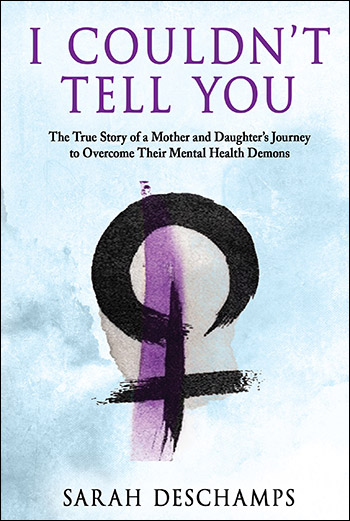
The book explores how medical hardship can fracture family dynamics, identity, and trust. My story traces my daughter’s descent into fear, anger, and despair, and my own parallel unraveling as I desperately try to protect the child I love.
My memoir sheds light on the hidden toll of chronic illness, and the strength required to keep going when hope feels out of reach.
As a mother, what was it like for you to watch your daughter go through not only medical issues, but mental health as well? When writing your memoir, did you want other families to know they are not alone?
It was excruciating to watch my daughter first suffer through so many surgeries and then descend into dark mental health issues. I would have done anything I possibly could to give her the best life, and yet it felt like everything I did, just made it worse.
In the end, we both struggled with our own mental health demons.
People have asked why I chose to write this book. I think mental health caused by medical trauma isn't talked about.
Families who go through what our family did don't tell their stories. It’s too hard to explain what it's like to experience that level of trauma.
We lived in hospitals, spent time away from our family and friends, and missed so much school. I wanted to try to explain to readers that even with the surgeries are done, the mental health toll is great, and we don’t talk about it.
The doctor who operated on our daughter in Los Angeles conducted a research study about the mental health impact of having so many surgeries. PTSD is a big part of the experience for parents, and in our case, for my daughter as well.
How did you navigate your trauma?
I didn't realize there was anything that was impacting me. My friends would say that my daughter was lucky to have me as her mother, and that my family was lucky to have me taking care of them.
I had an important job I went to every day, took care of my two kids, managed my family’s life, and handled my kids’ after-school sports and activities. It looked like I had it all organized.
The downfall of pretending that you are fine is that nobody really knows what is happening. In my case, I didn’t want other people to know, and I certainly didn’t want to talk about my anxiety.
At that time, our daughter was so angry and upset, yelling and screaming, and not doing well in school with daily issues. It got to a point where my husband and I started disconnecting. We didn’t know how to live through the drama and sadness of living with a child who was so unhappy.
He lived his life, and I lived mine. We didn’t fight, we just didn’t have anything to say to each other anymore. I believed, if we separated, there would be one less thing I had to worry about.
We finally divorced. At that point, I descended into a deep depression, realizing I couldn't blame my husband or anyone else for how miserable I was. It was all on me.
It’s a story of realizing that I'm not all that heroic or put together, and that I had to take a deep look inside myself. I went to a therapist. It was hard to admit that I needed therapy. I didn't want anybody to know my life wasn't put together.
Through that process, I realized a lot of things about relationships, including that my husband and I should have shared the responsibility for taking care of our daughters instead of trying to do it all myself.
My therapist sent me to a psychiatrist. In my book, I talk about how hard it was to admit that I needed that kind of help. I talk about getting medication and being diagnosed with OCD and PTSD, which I felt put labels on me and worried me that someone would find out.
I also finally understood that I had experienced mental health trauma.
After I got help, my husband and I reconnected. In fact, we got remarried. Our daughter still struggled immensely with not only her mental health, but she also required several more operations.
As parents, we fought with her because we needed her to get medical help, but she wanted to take some control over her own life.
There is a pull between parents who want to save their daughter, and a daughter who as she grows into adulthood, wants her own life.
What advice would you give other families experiencing something similar?
I think the most important lessons I learned after so much therapy and medical help is the importance of talking to people.
I didn't talk to my friends or family. I believed I had to keep it all together. I didn't want anyone to know how bad or hard it was.
People talk about the teenage years as difficult and say that's just the way it is. And I didn't push or describe what I was going through any further.
I wish I had been able to find the words to explain to people what was really happening.
I would also say find mental health professionals and make sure that you set aside time for yourself. Parents who experience such medical trauma in their children spend a lot of time in hospitals, and a lot of time at home caring for their unique child.
Take a step back and rely on your partner, or very dear friends or family.
Is there a particular audience you hope to reach?
I believe there is a large audience of people who will read my book. I hope that the medical community reads it. I hope parents and children read it, and I hope people suffering in silence read it.
I also hope people who are curious about the impact that mental health trauma can have on a mother and daughter read it.
I feel like right now in my city, with ICE present on our streets, there is a growing opportunity for us to explore mental health issues. The infliction of pain, fear, and worry about what will happen to our neighbors is horrific.
My book talks about what that feels and looks like. My story might serve as a place to start a conversation about mental health that could lead to some healing for all of us.
What are your thoughts on the narrative around mental health in our country? Do you feel people are more comfortable coming forward and talking about it?
I can only speak about my personal story. I didn't want to admit that there was an issue. I thought I was fine. I think many people experience this. We don't want to talk about something being wrong with us, or that we need help.
What I have noticed is that there are many more opportunities to speak with people in the mental health profession. It seems to me that people are now much more open to seeking help for what they went through, particularly during COVID, and maybe now even more.
It seems to me that there's a dialogue and a willingness to talk that wasn’t there five or six years ago. I think it is still very hard to talk about our feelings, especially when we don't feel good, but maybe it is easier to get help if you want it.
Do you plan to expand on the topic of mental health trauma more? What do you have planned next?
For the moment, my goal is to do as much as I can to promote this book in a way that allows for a conversation about mental health and recovery. That's my focus.
I feel this story needs to be told to a wide audience so that people can hear about how I learned to open up and talk about my own mental health.
A lot of times, when famous people write memoirs, there's always some wonderful thing that happens at the end of the book. Someone ends up at Harvard, or someone gets the Nobel Prize. Someone gets something fantastic, a goal is achieved, and so the whole book leads to that.
In the case of my daughter and me, we just get to continue living a positive life. I think that's a pretty relatable story, one that shows people that you get your life back after going through a really hard time.
You get dear, deep friendships and a stronger connection to your family. And in my case, I got my husband back. So, really good things happened, but nothing monumental of the storybook kind.
The most powerful thing to come from my story is that my daughter and I had a very entangled relationship, one that led to really difficult times where she didn't want me in her life, and I didn’t want to be in hers.
Now have a very positive relationship. Neither one of us is winning the Nobel Prize, but both of us get to go on with really wonderful lives, and most importantly to me, a great relationship. How lucky we are to have that.
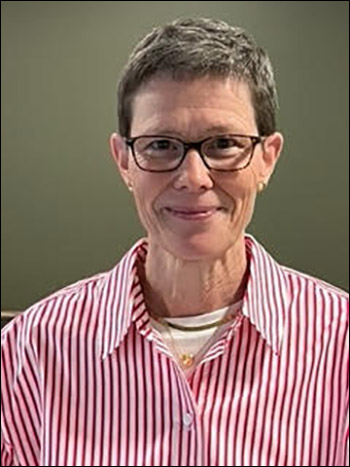
Author Sarah Deschamps is a memoirist and nonprofit development professional whose writing explores family, resilience, and the lasting impact of medical trauma.
A former teacher and administrator in the United States and Japan, she later raised millions of dollars for nonprofit organizations.
Her debut memoir, Journey to Japan: A Life-Saving Memoir, has been published internationally. Through her work, Deschamps brings empathy and honesty to stories of survival, parenting, and the emotional complexity of healing.
For more information: www.SarahDeschamps.com
Home |
Actors/Models |
Art |
Books |
Dining
Film & Video |
Food & Wine |
Health & Fitness
MediaWatch |
Money and Business |
Music |
Profiles
Professional Services |
Sports |
Style & Fashion
Technology |
Theatre |
Travel & Leisure
Copyright 1995 - 2026 inmag.com
inmag.com (on line) and in Magazine (in print)
are published by in! communications, Inc.
www.inmag.com
|


Advertiser Info
Subscription Form
Contact Us
|

