
















|

From Screen to Page:
Interview with Paul Locander
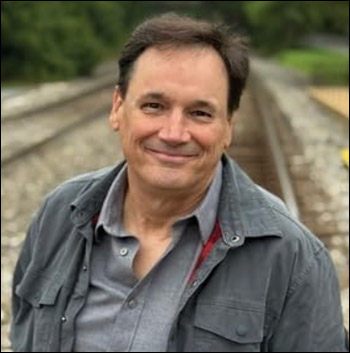
By Carin Chea
With his roots as an optioned screenwriter, Paul Locander has parlayed his penchant for turning hardships and tragedies into meaningful fiction with his debut novel, Power and Way.
Locander writes about rifts between father and son, a topic inspired by the complicated relationship he shared with his own father. Locander has not only written a compelling story but also created a vehicle for exploring and understanding the nuanced difficulties in familial relationships.
Leaning into deeply vulnerable spaces, the author reminds us that we are capable of breaking generational curses, thus preventing history from repeating itself.
Power and Way is a reminder that great beauty comes from great pain. Locander’s novel is not simply entertainment; it is a reminder that healing is always possible, no matter how difficult and painful the circumstances.
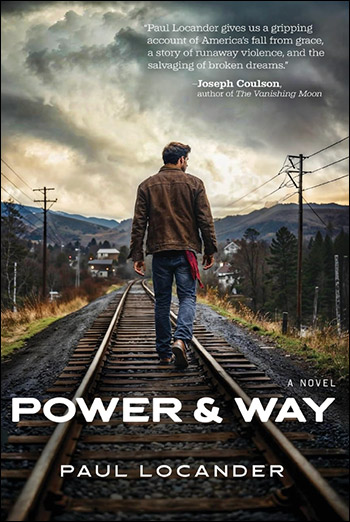
You’re an excellent writer and storyteller. Are you a lifelong writer?
I started my writing career as an optioned screenwriter. In my real life, I used to work in IT. I recently got out of the IT industry after working in it for 43 years. But ever since I was eight or nine, I used to have these recurring cinematic scenes that would pop into my head and repeat themselves.
Shortly after I got married, I came to the realization that the only way I could get these recurring scenes out of my head was to write them down.
I come from a long list of writers: My dad was a part-time writer, and my grandfather was in advertising. I’ve written 17 scripts over the years. Power and Way was the strongest of my works.
I decided to take this script and write the book. The characters are so well-defined that they wrote their own lines. Power and Way was the most well-decorated and won awards and recognition.
Tell us about Power and Way. How much of it is fiction and how much of it is based on your life?
I would say half and half. The semi-autobiographical part is the relationship between the father and son. My father and I never got along or operated on the same frequency.
The backdrop of the West Virginia town and the train derailment is fiction, but it created an interesting environment for these two characters. I wanted to drive these two and make them face each other, face their disconnect, and figure out why they couldn’t ever find a reconciliation.
If only that could happen in real life.
If I were to ask my dad if there was anything wrong, he would say, “What are you talking about?” Anytime I ever spoke with him, I was always on the defensive. I always felt like an idiot, like I was being judged. He always seemed to have a critical statement about me.
There’s a line in the book that goes, “If I were born a Mary or a Jane, I would’ve gotten along fine with my dad.” Being a boy, he had no idea what to do with me. I wish I could’ve diagnosed the disconnect, but my father and I were just very different people.
You know, it is very powerful to hear that. All the time, people need to know “why” or “did something happen to you in childhood?” But sometimes, people just don’t get along.
Producers also drove that point. They always asked, “What was the reason for this? Did you wreck his car? Did his wife die?”
The truth is: Nothing. Nothing happened. We just didn’t get along. We didn’t like each other. People who had great relationships with their mom and dad may not completely understand or relate to it [Power and Way], but adults who never connected with their parents will.
Sometimes people just do not connect, and they do not get along.
It creates such a burden on the descendant because they feel like they did something wrong, like they didn’t measure up to or achieve some sort of milestone that the parent was expecting of them.
I’ve had actors who’ve read the script and say, “That’s the exact relationship I had with my dad.”
I get it. It’s almost like we feel like we owe our parents something, and we don’t want to disappoint them. I feel your book will totally resonate with readers.
The book is a coming-of-age story for father and son. That’s their arc. The father is forced to come to terms with why he doesn’t get along with his son and vice versa.
Who do you think Power and Way is geared toward?
It’s really meant for anyone who has not found solace in their relationship with their parents. The book provides a reconciliation that a lot of people don’t get, but they can relate to and understand the feelings the characters experience.
I hope that, through the book, readers can work out what is truly hurting them, and (by the end) just set that baggage down. That’s something I concluded: My father and I were two different people who didn’t get along. There was no hidden meaning, and it wasn’t that I didn’t measure up. I don’t let it own me anymore.
That last statement, “I don’t let it own me anymore” is very powerful. And healing.
It is. It really, really is. It hurts a lot of people if they can’t reconcile their relationship with a parent. When that parent is gone, it leaves an unresolved void.
I hope people can find solace in the book, even if vicariously.
I understand Power and Way was originally a screenplay. How has turning it into a novel transformed the story? How was that experience for you?
I thought I could drop the screenplay into a Word document and that would be it. I was wrong.
I put in a lot of work to inflate the story to where it needed to be. The cool thing was it gave me the chance to add a lot of flavor and atmosphere into the story that (in script format) had to be assumed.
For example, you can write “it was an autumn day” in the script. But, as a novelist, you have to build that atmosphere, and you really have to become the wizard of your own world. Then, I could actually go into deeper thoughts. That’s why the book was so cathartic to me; it gave me the opportunity to work out a lot of those emotions.
I feel that sums up novel-writing pretty accurately, being the “wizard of your own world.”
It forced me to write things from my father’s point of view, which I wouldn’t be able to do in a script. The book really helped me work out a few things.
I tried to remind myself that my dad was raised by women and that his dad really did head for the hills. His dad disappeared. He didn’t have a sense of what a father does.
Writing his character was a challenge because I had to dissect and guess as to why he did the things he did. I had to build that backstory.
It sounds like you really developed a sense of empathy and compassion for your dad.
Yes, I really did.
Who would ideally play the lead roles in Power and Way?
I would love for the father to be played by someone like Harrison Ford or Chris Cooper. We also talked about going after Jeff Bridges for that role.
For Andy, the NTSB investigator and romantic foil, there are so many talented actors out there. I’ve always been partial to Hailee Steinfeld, Anne Hathaway, or Rachel McAdams, whereas Daisy Ridley and Gugu Mbatha-Raw would be fantastic as well.
For Kevin, I’ve thought about Tom Bateman, Josh Hartnett, and Miles Teller. And even Jai Courtney and Adam Scott from Severance.
Are there any upcoming projects you’d like us to know about?
I would love for the book to become a film. The script is camera-ready. There’s a lot of the script that lives in the book. The script is faithful to the novel.
There is a follow-up to the book because there’s a character in the book whose story continues. There’s also a companion book called Falling, Ohio. I hope to have that done relatively soon.
I’ve got a library of 17 scripts to develop into novels.
For more information, please visit www.locander.com
Home |
Actors/Models |
Art |
Books |
Dining
Film & Video |
Food & Wine |
Health & Fitness
MediaWatch |
Money and Business |
Music |
Profiles
Professional Services |
Sports |
Style & Fashion
Technology |
Theatre |
Travel & Leisure
Copyright 1995 - 2026 inmag.com
inmag.com (on line) and in Magazine (in print)
are published by in! communications, Inc.
www.inmag.com
|


Advertiser Info
Subscription Form
Contact Us
|

