
















|

Understanding Legacy With Patrick Asare
By: Monica Vera
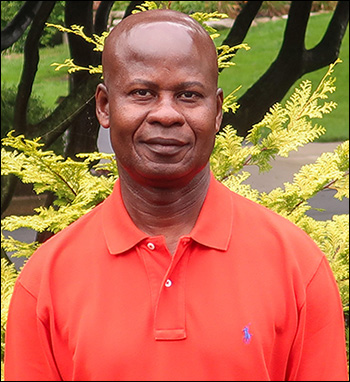
With Black History Month here, there’s no better time to introduce author Patrick Asare.
His new memoir, "The Boy From Boadua," recounts his struggles as a child growing up with illiterate parents in the Ghanaian village of Boadua, where education beyond middle school was practically nonexistent.
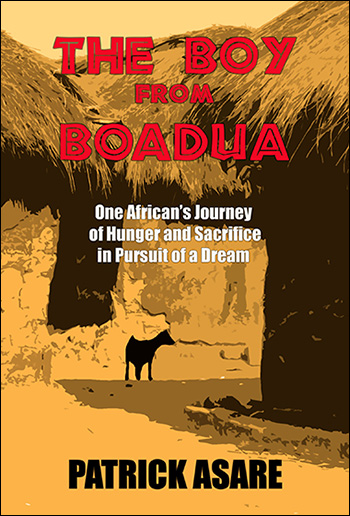
His memoir shares the story of his journey from those humble beginnings, to university in the Soviet Union and later in America. Along the way, he overcame astronomical obstacles, rising above them and succeeding beyond what anyone - including himself - could ever have imagined.
Patrick Asare is a man of many accomplishments. He holds a master’s degree in electrical engineering from Purdue University and an MBA from the Tuck School of Business at Dartmouth College.
Patrick currently lives with his family in Wyomissing, Pennsylvania. He is a principal at UGI Energy Services, a diversified energy services firm based in Wyomissing.
This is how my interview went with Patrick Asare.
What is the premise of The Boy from Boadua?
I wrote the book to share some of the lessons I learned along my improbable journey from a small village in Ghana to the Soviet Union and ultimately to America. The book was mainly born out of some experiences I had while teaching in Buffalo, New York.
I was shocked to see so many children in the predominantly Black student population come to school completely unprepared to learn. Instruction was severely hampered by disciplinary problems in the classrooms, in stark contrast to what I had experienced in my schools in Ghana, which had far fewer resources.
Those experiences led me on another exploratory journey to try to understand what inspired the students’ behaviors. The book is not only a narrative of my journey, but also reflections on issues such as education, culture, race, and the importance of role models in children’s lives.
Tell us about the creative process in writing this book.
My original idea was to structure the book as a series of essays interspersed with personal stories. I wanted to use my personal story as a basis to examine many of the socio-cultural, racial, and political questions I had been grappling with since I left teaching.
I wrote the full manuscript and shared it with my first editor and a number of family members and close friends. To my dismay, everyone told me that the personal story was a lot more compelling than the essays, and that it would be more useful to write a book focused on that.
One literary agent I spoke with about the manuscript told me that she didn’t read personal essays unless they were written by Thomas Friedman. I understood the context in which she was speaking, and did not take it as a personal insult. But I was deeply unhappy with the approach everyone was recommending, for two reasons.
One, being somewhat of a private person, I was hesitant to write a book that would end up looking like an autobiography.
Second, and more important, I had to tear up that entire first draft and rewrite the manuscript from scratch. That is an awful position to be in, as any author who has had that experience would admit.
I eventually took the advice however, and wrote a chronological account of my story. As I did, I looked for junctures where I could share and discuss some of the learned lessons, but I reserved most of those broader discussions for the “Final Thoughts” chapter at the end.
What did you learn about yourself in this journey of exploration?
Growing up, I was always in awe of my father. I could never fathom how any human being could work so hard nonstop, looking dead tired all the time, and still have the capacity to exude the level of optimism that I observed.
I knew he was struggling mightily to feed and clothe his fourteen children, but I was surprised by his cheerful nature on the rare occasions when he was not working on the farm and was socializing with his friends in the village.
It was during the process of writing the book, when I had to think very deeply about the issues I was discussing, that it dawned on me how heavily his life had influenced mine.
When I picked up the scrap of newspaper from the ground in the village and read that thing on it that would take me on the improbable journey, it was the example of his relentless work ethic, sheer determination and optimism, all of which I had internalized without knowing it, that drove me to overcome one seemingly insurmountable obstacle after another.
What was on that newspaper?
Streetside food vendors in the village used scraps of newspaper to wrap the foods their customers bought. Most people simply threw the papers on the ground after eating, and the wind would blow them everywhere around the village.
It was one of those scraps that I picked up one afternoon. It had a segment of an article that talked about an elite boarding school in Ghana. The school educated children of the Ghanaian elite, and those students went on to study at oxford and Cambridge Universities in England.
They returned home after that and became the most influential people in the country, serving as prime ministers, ministers of state, professors in Ghana’s universities, and diplomats. I read this as a ten-year-old and it made an instant impression on me.
I decided there and then that I wanted to attend this elite school and eventually become one of those influential people in Ghana.
What do you want your readers to gain?
I wrote this book primarily to inspire young people. Except for the fact that everyone in my village was black and therefore I didn’t have to contend with the racial factor growing up, I was every bit as disadvantaged as the children I taught in Buffalo. But I was also lucky in the sense that I wasn’t that aware of my disadvantaged status.
I knew my family was poor but without television and other media available to us, I didn’t quite know the extent of our poverty relative to that of others. So I was able to focus on what I was doing without all the distracting negative signals that most children, not only here in America but elsewhere, are exposed to nowadays.
For that reason, I strongly believe that as adults, one of the best gifts we can give young people is to do whatever we can to preserve their childhood innocence.
When I first thought about a title for the book, “Cover Your Ears” was what came to mind. What I meant by that is that children, disadvantaged ones in particular, should learn to tune out negative signals, which can be debilitating. And frankly, it is the responsibility of adults to shield children from these unhealthy signals.
If I had known how daunting the task I had set for myself was after reading that article, I certainly wouldn’t have bothered to try. My childhood innocence remained intact throughout that period, and I blindly chased after the dream.
How has your book been received so far?
I have been very pleasantly surprised by the overwhelmingly positive reception. Many people have thanked me for writing the story.
A few of my friends have told me they are reading it to their children. For a writer, the joy that I see people get from reading the book is the best possible reward.
What advice do you have for other aspiring writers?
Two things. Any new writer has to be very patient. It took me about ten years to write this book - although the process was interrupted several times by various events. Writing is something that cannot be forced or rushed. I had to take several breaks, lasting weeks, sometimes months, either because I was mentally exhausted, or had run out of ideas.
The second thing is to have a heavy dose of humility. Ability to listen to criticism, however unpleasant it might be, is absolutely essential.
To learn more about Patrick and his memoir, please visit his website, https://PatrickAsareAuthor.com.
Home |
Actors/Models |
Art |
Books |
Dining
Film & Video |
Food & Wine |
Health & Fitness
MediaWatch |
Money and Business |
Music |
Profiles
Professional Services |
Sports |
Style & Fashion
Technology |
Theatre |
Travel & Leisure
Copyright 1995 - 2026 inmag.com
inmag.com (on line) and in Magazine (in print)
are published by in! communications, Inc.
www.inmag.com
|


Advertiser Info
Subscription Form
Contact Us
|

