
















|

The Epic Author:
Interview With J. W. Zarek
By Carin Chea
J. W. Zarek is a disabled veteran, former FBI adjudicator, and award-winning, bestselling author. But, above all, Zarek is an overcomer and beacon of hope.
Living by example, Zarek has been able to widen his beacon by transforming his wisdom and experiences into written word.
The author, whose real-life is already the quintessential hero’s journey, is proof that courage and faith will get you far in life.
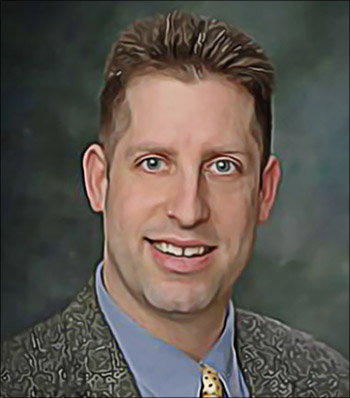
It says on your bio that you “catch naughty folks for the Government.” What’s your day job?
In my job I work behind the scenes to review complicated casefiles of individuals considered for positions in the government, and it’s not uncommon for individuals to have a colorful past with a plethora of issues. When issues can be mitigated, individuals may be hired.
However, some individuals with non-mitigable issues or automatic disqualifications may be banned from government positions from eighteen months to indefinitely, and when OPM gets involved, legal action may be taken which may result in incarceration.
How did you segway into writing?
I remember the first time a teacher made me write a story about Halloween in 6th grade. I don’t remember story details, but her telling me how much she enjoyed what she read, and how well written it was, stuck with me.
When I served in intel analyst assignments in the military, the research and writing was intense. Today, I continue to research, write reports, papers and summarization must be spot on succinct.
Government reports tailored for niche audiences brings a strong sense of professional satisfaction, but the drive and desire to get stories out of my head stronger. And stories shared, people craved more, so I started writing them down and now I’m on my third award-winning book.
How did you come to write non-fiction and fantasy literature?
I didn’t think of writing full-time when I wrote papers in school and work. But my first book, Naughty or Nice - Whose list Are You On? I had to write. Because I believe everyone has the right to be safe.
Author and speaker Gavin de Becker writes and talks about people listening to their instincts to keep themselves safe, but when you ignored your instinct, you may find yourself in danger. So, learn to trust and qualify when your instinct speaks to you, and when you listen, it can help save your life.
I finished a degree at Marymount when I joined the FBI, and my thesis about red flag behaviors found in relationships, earned me an invitation to present a paper at the world’s first forensics congress in China.
To expand on this topic, some people need to see one red flag behavior before they take heed. Other people need ten or more red flag behaviors before they’re able recognize what triggers an abnormal reaction to place you in dangerous and life-threatening circumstances. Wouldn’t you love to know the person you’re bringing home for dinner is a serial killer, before you find out that you and your family are the main course?
You can’t unsee these red flag behaviors once you’re made aware of them, and this awareness helps keep you safe. And its nature for opposites to attract in relationships and contrasting behaviors can create unexpected tension.
Thankfully, not everyone we meet is a serial killer, and once we’re made aware of these specific behaviors in ourselves and our mates, may we better understand what triggers extreme swings in behavior, which naturally result in reducing and eliminating such triggers, which helps improve and strengthen our relationships for the better.
And as our relationships improve, we find ourselves in happier circumstances and states of bliss. This led me to write the bestselling book The Happiness Code, I co-authored with Ray Brehm and other authors.
This book is especially relevant in today’s day and age, because who doesn’t want to have and know greater happiness in their life. And in this book, the various authors share their personal happiness hacks they use, you can use too.
The first happiness hack I share in the book - Happiness is a choice. And when you make this choice to be happy, your perception, your reality, and your life changes.
Another happiness hack I share is for folks to use the power of questions to bring and create a state of instant happiness. For most of us, who hasn’t said or thought questions in the negative. Why am I so fat? Too short? Too tall?
But what happens when you frame the question to achieve a positive, desired outcome? Ask yourself the following question: “Why am I happy?” Say it out loud. Go ahead. I’ll wait.
I’m sorry, what?
Ask yourself the question out loud “Why am I happy?”
Oh. Okay. Why am I happy?
Did you notice as you thought or said the question aloud, the corners of your mouth turn up, and forms a smile? This auto response happens because our subconscious is hardwired to proof whatever question or statement you give or feed it.
Another thing people don’t hear more: “I am enough.” Now say this phrase out loud. Why these phrases? It costs nothing and they’re fat-free.
When you say the phrase once or twice, you may or may not believe the words yet. But the more you say a phrase the easier this gets. And when you say these phrases twice a day, every day, for thirty days, repeating these phrases become effortless, and folks around you start to notice the positive changes in you.
The third happiness hack I share is Gratitude. Be grateful for everything you have and grateful for all the things you want to have, and imagine such things are already yours.
One way to set this in motion is to write a letter to who or what you believe in, God, Universe, Spirit, Buddha, Jesus, Allah, etc. And in your letter of gratitude, you write everything you’re thankful for as if you’ve already received what you want: “Thank you for this loving relationship I have with_______,” “I am grateful for always being in a state of great health,” “I appreciate I always attract financial abundance, growth and stability into my life,” and so on.
And after you finish your letter, you end with three thank you in a row. “Thank you, thank you, thank you” and sign your name. Read your letter aloud when you wake, and again just before you turn in, every day for 30 days, and then put your letter away and forget about it, and simply be aware of what the universe brings you afterwards.
I’m a disabled veteran with permanent, painful neuropathy in both legs and feet and I had no business running in the Walt Disney World Marathon.
On my first deployment to the Persian Gulf, I broke my right foot in multiple places and later, the same foot had to be re-broken to properly heal. During recovery, a blood test revealed I had gangrene and amputation from the knee down was a real possibility.
Thankfully, powerful antibiotics worked. I got to keep my foot and leg, and I picked up a cool, new permanent limp.
Then a decade later, I had two surgeries to remove a Methicillin-resistant Staphylococcus aureus (MRSA) infection from the same foot. The Chief Surgeon told me to make final preparations because MRSA is aggressive and over seventy percent of individuals don’t make it. He told me everything would be okay, and I said, “Doc, you and your staff treat me like I’m the other thirty percent, because I have to get back to my ship on deployment and raise my son.” Again, I recovered, my limp more pronounced.
After I was honorably discharged, I returned to the East Coast. And the day I was fitted for shoe inserts at the Waler Reed Amputee Clinic changed me forever. In the waiting room, surrounded by veterans missing arms and legs, I became aware how happy, upbeat, and engaged in conversation everyone was with the person next to them.
It was in that waiting room I made the choice to run in a marathon. I was going to run for my dad, also a veteran, who died from cancer, and for all the men and women who ever wore a uniform who were unable to run now.
I discovered a group called Team in Training (TNT) that helps people train and participate in different athletic events while raising money for Leukemia & Lymphoma Society.
I was pumped and motivated. Training was a struggle the entire time. But the biggest challenge was running up hills. Kee surgery removed cartilage, created tremendous pain that would only go away when I was on a downward slope or flat ground again.
One training day, I was scheduled to run 14 miles and it went longer than expected. The weather bad, the run rough, and one of the hills took longer than expected. I pushed through the pain up the hill, and at the bottom, a long TNT blocked my path.
He told me based on the time it took me to run to this point, I wouldn’t complete the actual marathon’s sixteen hour per-established completion time. I told the coach I was running in the marathon. He raised his arms and said, “Then I take no further responsibility for you, and strongly recommend you do not participate in the marathon.”
I made it to race day, but on mile twenty-two my feet went flat, and my legs and feet were heavier than I’ve ever experienced. I hit the Runner’s Wall. I was about to give up when a man wearing a TNT Coach’s t-shirt ran alongside me. He asked how I was doing and how I was holding up.
I told him, “Not good, I hit the wall and I think I’m going to stop.” He asked, “So why are you running?”
I swallowed my breath and tumbled out: “For my father and for all the men and women who served who couldn’t run a marathon.” I didn’t hear a response from the coach, so I turned around and he was gone. I looked behind me, each side of the road and further in front, by my mysterious coach, my guardian angel had disappeared.
The oddest tingle washed through me when I said the words. There was a shift, a drive to keep moving and I focused on the same thought, for my dad and all the men and women in uniform no longer able to run.
The mantra stuck on repeat, fueled my body to keep running the remaining miles. And when I crossed the finish line, I look up to the skies and said, “This is for you dad.”
My body rippled with a joy and happiness that flooded every cell. And I ran the marathon in under thirteen and a half hours.
The coach who washed his hands of me came up to me to shake my hand to apologize he ever doubted me.
I wasn’t even mad Walt Disney World’s website said I finished as a 44-year-old woman. Because I made the choice to run a marathon, and when I couldn’t go on, I kept running, and the outcome of that choice brought me a happiness I carry with me to this day.
Of the things you want to do in life, there are challenges that are going to push you. But, the happiness that results and ensures afterwards is worth the journey. It’s so important to have happiness hacks in our lives. All the authors in The Happiness Code, share their happiness hacks. And the ones that resonate the most you can incorporate in your life.
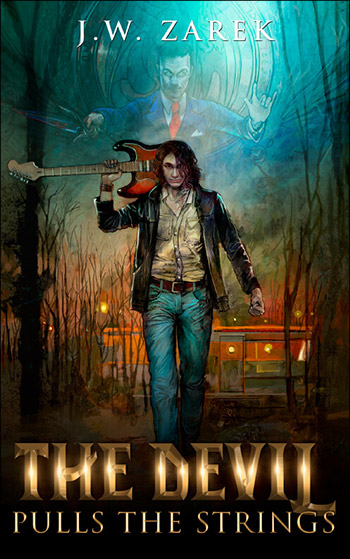
Tell us about The Devil Pulls the Strings. What inspired you to write this?
I grew up reading and listening to amazing epic fantasies and bedtime stories. I wrote this book to honor the hero’s journey, and infuse the Slavic mythology I grew up with, and the many faces of the mother of all witches, Baba Yaga.
In stories today, Baba Yaga is often depicted as a two-dimensional evil character, but she’s so much more than that. She can be the antagonist, a mentor, a helper, help or eat the hero. And her many wonderful magical objects and creatures in these stories and the heroes and protagonists she’d interact with all fueled my imagination and fed my soul. And this is where so much inspiration springs.
Those familiar with Niccolò Paganini, the Rockstar of his day, is recognized as one of the world’s greatest violinists who changed violin technique. Believed to be born with Marfan’s disease, the cause of his elongated fingers and joints that allowed him to play and reach parts of the violin, impossible for most. And one rumor persisted; his mother gave the Devil her son’s soul so that he could be the best violinist in the world.
Imagine a world where this was true. Then you’d be immersed in the world of The Devil Pulls the Strings, where time travel, twisted history, secret societies, Paganini’s music and one haunted hero collide.
Twenty-two-year-old Boone Daniels, has problems, debilitating panic attacks from an evil spirit, a wendigo stalking him since he was six years old. And in the week the story starts, he almost kills his best friend, Flynn Michaels, in a St. Louis Ren Faire joust.
In the hospital, Flynn makes Boone promise to fill-in for him to play in his NYC gig, and after he arrives, and his NYC contact dead, Boone finds himself on a wild journey through time to find Paganini’s cursed music.
In the book, different organizations intend to use Paganini’s music to summon the devil, which could result in the destruction of New York City. Boone discovers, when you combine three of Paganini’s most prolific songs, it reveals his secret sonata used to summon the devil.
While trying to find the music, Boone stumbles in a portal that lands him in 1813 Genova Italy, without a clue how to find this cursed music, or a way back to modern-day NYC, and do this in less than three days. And all Boone wants is to keep his promise to his friend. The same friend he almost killed in a joust.
What do you want your readers to take away from your book?
Hope. The character, Boone, no matter what’s thrown at him, he’s stuck on his promise to his friend. No matter how bad things get, you can keep your hope and faith, and Boone always finds the silver lining in the clouds. No matter how ridiculous his circumstances, he must push through.
And in today’s day and age, all of us need to have and keep hope and faith. Because when you power through even the worse of circumstances, you don’t just survive. You thrive and grow.
Who would play the protagonist in your book if it should be made into a limited series?
I’m glad you asked that. With Paganini, he was thin, skinny and tall. Adam Driver makes the perfect Paganini or Sinti. Because he’s so versatile.
There’s a character on Stranger Things who has dreamy, wavy hair, Joe Keery – I could see him playing Boone.
For more information, visit https://jwzarek.com.
Home |
Actors/Models |
Art |
Books |
Dining
Film & Video |
Food & Wine |
Health & Fitness
MediaWatch |
Money and Business |
Music |
Profiles
Professional Services |
Sports |
Style & Fashion
Technology |
Theatre |
Travel & Leisure
Copyright 1995 - 2026 inmag.com
inmag.com (on line) and in Magazine (in print)
are published by in! communications, Inc.
www.inmag.com
|


Advertiser Info
Subscription Form
Contact Us
|

