
















|

The Human Idea, Earth's Newest Ecosystem: Author Anne Riley Explores How Ideas Shape and Redirect Our World
By Andrea Marvin
Author Anne Riley’s latest book, The Human Idea: Earth's Newest Ecosystem, explores the interconnectedness of all living beings and the evolutionary journey that has shaped our existence.
It dives into the power of ideas and how acting upon them has transformed our survival strategies, leading to both remarkable achievements and significant challenges.
The Human Idea explores the concept of the Ideasphere, a structure for understanding human interactions and social systems and how we can collectively use the framework to move toward a better, sustainable future.
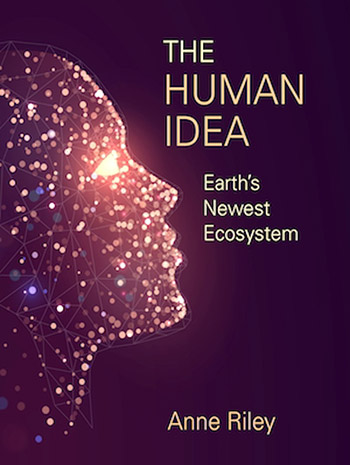
Riley’s book is a call to action as our world rests at a pivotal moment with the climate crisis and social inequality widening. Her latest book offers a roadmap for applying the lessons of nature to build a better world.
Author Anne Riley says The Human Idea will resonate with audiences that are socially aware and concerned about current societal challenges. She aims to offer hope by offering a digestible viewpoint of major issues and reframing them.
Riley presents new ways to build a more equitable society, examining topics such as taxation and elections, environmental pollution, and approaches to homelessness.
The Human Idea is logical and approachable, and leads readers to consider the patterns of the universe with a slightly difference perspective.
How would you describe your latest book, The Human Idea?
My book, The Human Idea: Earth's Newest Ecosystem, describes how humans fit into the grand scheme of existence in the universe. You can see the universe as three layers.
The bottom layer is the energy and matter that surround us. The second layer is the life we see on Earth such as the plants and animals around us. And the third layer is something humans have created on their own, which I call the Ideasphere: the ability to think and manipulate the world around us.
Humans can do this in ways animals cannot, and it has changed the world. The book explains the levels and shows how humans have changed the world, and the consequences of that are both amazing and dangerous.
It touches on those implications of the human idea.
When did you become curious about this topic and start researching the Ideasphere theory?
I have been wondering how humans have fit in the world since I was a kid. I have a business background, and in the early 1990s, I read a book called Bionomics, which Michael Rothschild wrote, comparing human economic systems to natural systems. I thought it was brilliant.
I didn't agree with all his conclusions, but he helped me see the world in a new way. But there was a big hole in it. If biological systems are like human economic systems, then biological systems should be like humans.
I thought somebody way smarter than me would write that book in a couple of years, and I’d read it and have the answer. 25 years later, nobody had written the book, so I decided to write it myself. I literally wrote the book I'd been waiting for.
How would you describe the parallels? What are the similarities between biological systems and economic systems?
The main thing is that the two systems line up completely parallel. With life, everything is based on DNA at the core. DNA creates cells, cells create tissues and organs which make up our bodies. You can think of the body as a community of cells.
This is exactly what humans do with ideas instead of DNA. We use ideas to create products, people hold those ideas in their heads just like a cell holds the DNA. People and cells are equivalent. People make up societies similar to how cells make up a body. They work in parallel, but on different levels.
People can create ideas and choose which ones to act on. We can create ideas to build buildings, clothing, rocket ships, or computers.
Life is much more limited. DNA is limited to what it can do as instructed by its DNA.
Humans have been able to manipulate the world and, in some cases, break rules that have kept the natural world alive for millions of years. And we are approaching a tipping point: we are now the only species that can make ourselves go extinct, and we are at risk of doing so because we haven't followed some of nature’s foundational rules.
Do you hope the book’s message encourages people to act on the climate crisis?
The way life works is that if a cell makes a change, it has to fit in its environment for that change to take hold. If you create a change that the body cannot tolerate, the body will die. It won't work.
On the other hand, a person can create an idea that doesn't have to be right. It only needs to be accepted by others. And if it gets accepted, the idea takes hold, spreads, and takes on an evolution of its own.
Right now, we're dealing with a lot of untruthful ideas running around, and they're basically bumping up against the truth. We have facts, fake ideas, and alternate certitudes, and they have equal billing in our Ideasphere. In the end, it will cause trouble.
That's why you have people who don't accept climate change, even though the facts say climate change is a real problem. And autocracy is another example where people question if democracy is good for people. And the whole point of democracy is to keep power in the hands of the people.
We have this refusal to accept facts as true, and it's causing real trouble in the world today.
Philosophically, do you hope readers will question social constructs and conclusions, considering why they accept these ideas to be true?
The underlying message of my book is about collaboration. Cells play their role in the body. Heart cells pump blood, and stomach cells process food. But cells can't hurt other cells in the body, because that would harm the entire system.
Well, we should be using that same basic foundational message as humans that cells do. It would look a little different because humans think and choose.
With humans, it would be that you get to do whatever you want to do, but can't hurt each other along the way, because if you do, you're hurting our society in general.
So, that's the equivalent foundational message I want people to understand. And nature does that with very specific tools that we can use, modified for the human ability to choose. If people accept that idea, they will improve their own lives and that of their society.
Who is your target audience?
People who are actively aware of the social situation we're in and feel troubled by it. My ideas give people hope as to how to turn the ship around.
If we recognize the direction we want to go, we can start iteratively, taking on our biggest problems, looking at them differently and acting differently to build a better society.
I give examples in my book about taxation and elections, pollution, and how we deal with homelessness.
I give examples in my book that if we run a body like we run our society in the United States today, our body would be dead, because we do things backwards in a lot of ways.
We've ignored the ways life works successfully. I give a bunch of examples so that people can see what I'm trying to do. And then I give a more in-depth examples on social media and how that would look differently if we acted more like a body.
How would you describe the overall format and layout of The Human Idea?
I make my case from the very beginning. I talk about the universe and how it works and how those patterns repeat in life. I talk about the characteristics of life and how humans compete, collaborate, and coordinate.
I discuss the implications of human behavior for society, offering examples for people to consider. I've made the book exceedingly approachable.
I summarize each chapter with a brief overview of the key points. I wanted to make my book as accessible as possible to all readers.
I explain the science, how nature works, and explain how humans are just like nature, but work on a different level.
It explains concepts to people in a way that they've never seen before and helps them understand and see the world with a different perspective.
I’m unsure why nobody thought of this before. I am not like a brilliant scientist; I've just been thinking about this my whole life, and through experience, extensive reading, and research, I got to a point where I was like, “Oh, I get it now.”
Did quite a bit of research go into this book? Did you apply your own experience in business?
I've been reading natural history and politics my whole life and have this broad background that business gives you. I worked in high tech, manufacturing, and banking, and have gained broad experience.
I worked on a congressional campaign and got a sense for how human coordination systems and our government work. It’s just sort of putting all of this together.
In a way, I’ve been researching my whole life. But I had to flip the perspective and get that leveling I talked about earlier. Once you see the patterns in the universe, you can make out how it works. It took me a long time.
Until I understood that ideas were at the base of humans, I couldn't fit humans into the pattern. What humans do differently is think. That's what’s different, and once you see that ideas are at the core, similar to how DNA is at the core of a cell, you get it. Everything is connected by the ideas people have.
Do you plan to stay on this topic? What are you working on next?
The most important thing right now is to spread this idea, because we're at a tipping point. My book will give people hope and make real change through a simple idea they can apply immediately.
I know that I live my life this way. Maximizing my choices without hurting anyone else makes a huge difference in how I live my personal and professional life.
I'm hoping that anybody can look at this and start making decisions based on this priority.
It's not a priority right now in our society. Corporations exist to make a profit. And if they can get away with harming people, they will. And so, this is a change in how we approach all kinds of human activities.
It's important to me to get this message out. This is now my life's work.
I feel like the next thing I would write would be looking at all these areas of society where we have problems, elections, and government, taxation, for example, and couch them, reframe them in this way of looking at maximizing choices and doing no harm to give people a clearer idea of how we can change the world.
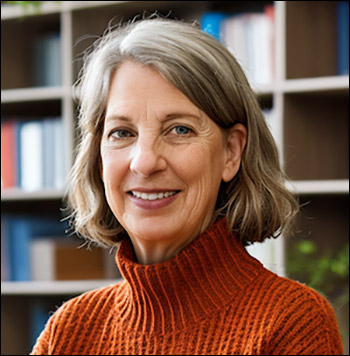
Author Anne Riley has a Master of Business Administration and has worked in various industries including chicken processing, high tech manufacturing, database design, elementary teaching, system development, product distribution, and private banking.
Her work is inspired and influenced by Michael Rothschild's Bionomics as well as the minds of Charles Darwin, and Stephen Gould.
Riley describes the Human Idea as approachable, funny, and insightful. She wants readers to realize there's hope to make the world a better place that’s not overcomplicated, pointing out nature always works as simply as it can and humans can do the same.
Riley’s authored a handful of other books including, DINA: Nature’s Case For Democracy and Aerie.
For more information: www.TheHumanIdea.com
Home |
Actors/Models |
Art |
Books |
Dining
Film & Video |
Food & Wine |
Health & Fitness
MediaWatch |
Money and Business |
Music |
Profiles
Professional Services |
Sports |
Style & Fashion
Technology |
Theatre |
Travel & Leisure
Copyright 1995 - 2026 inmag.com
inmag.com (on line) and in Magazine (in print)
are published by in! communications, Inc.
www.inmag.com
|


Advertiser Info
Subscription Form
Contact Us
|

