
















|

We’re All Mad Here: Author Marie Kuipers’ memoir unravels the complexities mental illness has on family dynamics, using dark humor and straightforward honesty
By Andrea Marvin
Author Marie Kuipers' memoir, We’re All Mad Here, uses dark humor to explore the complexities of grief, generational trauma, and family dysfunction, as she unravels her personal story about growing up with a mother who struggled with mental illness.
Kuipers’ memoir goes into depth about her mother’s manic highs and lows that she witnessed as a child, and how her mother’s constant paranoia and anxiety followed her into adulthood.
The memoir is authentic and written from a place of truth, as Kuipers tells readers how the reality of her mother’s mental illness pushed her far from her family, eventually moving to the other side of the country.
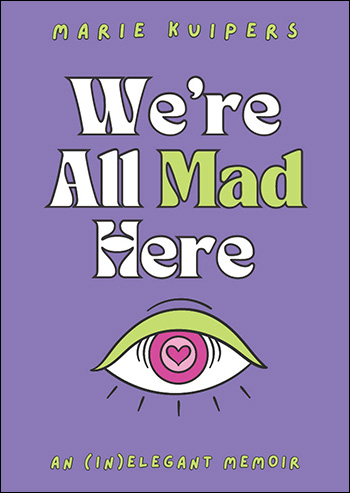
Kuipers explains how seeking counseling and finding community helped her heal, and that finding humor in heavy situations is a powerful way to build resilience.
We’re All Mad Here invites readers to become curious about the possible emotional patterns they resort to when they tolerate or internalize tough situations in their lives, using real-life examples to make concepts like anxious attachment style understandable.
We’re All Mad Here is inspired by blog posts Kuipers wrote while dealing with life traumas, such as her divorce, which resonated with women who lived similar situations.
The memoir offers relatability and comfort for readers navigating the weight of grief, or who are dealing with difficult family dynamics or complexities of mental health. The memoir is written in a way that’s brutally honest, relatable, and funny.
Kuipers hopes We’re All Mad Here makes others feel less alone and offers a good laugh.
She explains how seeing the ridiculousness of life’s situations is an invitation to look beyond the trauma or pain and is a powerful tool for taking your power back while building self-awareness and resilience.
How would you summarize your memoir, We’re All Mad Here?
It's a memoir that uses humor and outrageous storytelling to deliver dark theories and undercurrents about mental illness and what I grew up with and experienced throughout my life.
I survived by focusing on the ridiculousness and humor of it. When you can laugh at something, it lets other people laugh at their own stuff, too.
I wrote my memoir in the way I talk, making the story accessible, funny, and universal.
How would you describe your childhood? What challenges did you face?
My mother struggled with mental illness, and it got worse as she got older because she wouldn't seek treatment or take her medication. Anybody who suggested that she should was immediately ostracized and cut off.
I believe my mother suffered from bipolar depression with manic highs and lows, moments of rage, and moments of nothing.
She was also very anxious beyond what you can even imagine, not allowing me to walk to school even though we lived two houses away. I was raised in a state of high alert that something terrible was going to happen to me.
I became afraid that I would trigger her anger without even knowing it. There was no rhyme or reason to what would enrage her. I just thought that's how life was.
What was the turning point for you?
As a teenager, I started to realize that she wasn’t right. I resented the hell out of her because I wasn't allowed to do the things that my friends were starting to do. And if I did go to a party, my parents would show up unannounced.
It was just this constant overlord, monitoring to make sure I was safe and behaving. I wasn't a rebellious kid and was always so afraid of getting into trouble with my mother, even when I was away at college.
I started therapy about 30 years ago because I didn’t want to turn into my mother.
What people don't understand about therapy is that it takes a long time. You don't just go in, have a few sessions, and become fixed. I'm still figuring things out and realizing a lot of my behaviors are trauma responses and anxious attachments.
Although we're talking about mental health now, 30 years ago, we really weren't. It wasn’t something that you discussed.
When I first went on antidepressants in my late 20s, I would go to a pharmacy three towns away because I was so ashamed.
I didn't want the pharmacists in my town to know that I was mentally ill, you know? And there just isn't that shame anymore.
Eventually, I had my own house but was still in the same town as my mother. She would drive by my house every night and shine her headlights into the front bushes to make sure that nobody was lurking to murder me. And that was just my life.
I had gotten an alarm system and changed the code frequently, because of my mother. She tripped over it one day and didn't know the code. When I came home, my house was crawling with police officers and firefighters because my mother had broken into my house.
Shortly after that, I left and kept moving farther away, eventually settling in Florida and a couple of other places. And that was not far enough.
I ended up in Park City, Utah, 2,000 miles away from my mother. She was emotionally and verbally violent, but not physically violent. That physical distance was very valuable.
In my 40s, I took up roller derby, and it was the best thing I ever did for myself.
I was so proud that I had learned to skate and met people who are still in my life, becoming the most profound friendships. And I couldn't tell my mother, because I knew it wouldn’t be worth the pain of telling her and having to hear about how I was going to die.
I just never told her. And then my mom died suddenly. And she never knew that I had found this happy thing that made me feel strong and part of something.
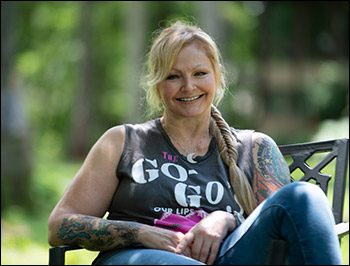
At what point did you decide to share your story and write We’re All Mad Here?
I kept a blog around that time and had a couple of other events in my life that were pretty awful. My ex-husband had been catfishing and stalking me, becoming a very dark chapter, which I ended up writing about.
Women who read my blog would reach out thanking me for being brave enough to share my story, telling me it made them feel brave and strong. This was massively powerful to me.
I never forgot that and felt a responsibility to tell these ugly stories, because I certainly wasn't the only one going through them. I thought maybe I'd put it all together someday, but I didn't do anything with it for 10 years.
I'm an editor and have been a copy editor for years, editing other people's books. A community of publishing professionals and I created this sort of collective cohort; a really vibrant community that bounces ideas around.
I had three different people within a short period of time encourage me to write a book, which I hadn’t touched in a decade.
A book coach and I were kind of the head cheerleaders for this group, and she encouraged me to send her a few pages, so I did.
She couldn’t even go to bed that night because she couldn’t stop reading it, telling me, "This is happening, so get ready.”
About a third of the book is from old blog posts, primarily the ones that people had said were helpful to them. And then the rest of it was stuff that had happened in the interim or other memories about dysfunction.
What key themes or messages do you hope readers will connect with in your story?
I want people to know if something has damaged them, and if they suspect it wasn't right, it’s okay. There are people you can work with to find out what happened to you.
But also, to know that you can laugh and still be joyful while you figure it out. You can look at the ridiculous side of awful things to get through them without being a victim.
That's a big thing with me because my mother was an eternal martyr. That’s kind of been my whole mission in life, to not be a victim.
I've always tried to find out what part I played, on it, and look for the good that came out of terrible situations.
I think using humor and inviting people to see the ridiculousness are ways to release the victimhood mindset. And some people are victims, but you cannot move past that while you're feeling that way.
Seeing the ridiculousness is an invitation to look beyond the trauma or pain at the bigger picture and maybe have a laugh. I want people to know they’re not alone.
How do you see the current state of mental health care? Do you think there has been any progress?
I do think we've come a long way in talking about it and shedding some of that shame.
When I was a kid, you did not speak of it. Social media is making mental health conversations accessible.
I do think terminology is thrown around that might not make any sense to some, like trauma bond, trauma response, or anxious attachment style.
I show readers what an anxious attachment thought and trauma response is in real life, and how what happened to you influenced these behaviors. I think sometimes you have to show people what it looks like so they recognize the behavior.
I think storytelling is the oldest way to connect with a community, teach, and bond with people. I think the memoir space can be valuable because we're not making anything up.
What are you planning to work on next?
I have a couple of things in mind. I would love to write a book about celebrations, another way that I have always coped.
I love celebrating holidays and international days. I love honoring celebrations and trying to understand them. My dream project would be to go around the world to some of these wild celebrations.
In South Wales, they have something called Mari Lwyd, a Christmas tradition. They take the skull of a dead horse and drape it in a sheet, place Christmas bulbs in the eye sockets, and adorn it with ribbons and decorations. They go door to door with these terrifying horse skulls and challenge the homeowner to a rap battle.
I also want to go to the Shetland Islands, where they have a Viking fire festival in the middle of January. They spend a whole year building a Viking boat, light it on fire, and parade through the streets.
I want to go report on these celebrations and learn why people do them.
Author Marie Kuipers is in the planning phase of her next book about celebrations, and she plans to travel across the globe to experience these traditions in person.
A central theme of the book will be that we are not that different – the way people celebrate, why they celebrate, and what they celebrate are similar across the board. And from a broader view, what brings us joy and pain, and what we look to for hope, are alike.
Kuipers believes celebrations are another way to bring people together across cultures and time zones, in a way that's funny and joyful.
Kuipers is a copy editor and proofreader. We’re All Mad Here is Kuipers' first book, and she hopes it helps normalize conversations about mental health.
Her writing style is described as straightforward with a relatable message mixed in with dark humor.
For more information, visit: www.MarieKuipers.com.
We’re All Mad Here can be purchased on various sites, including Amazon.
Home |
Actors/Models |
Art |
Books |
Dining
Film & Video |
Food & Wine |
Health & Fitness
MediaWatch |
Money and Business |
Music |
Profiles
Professional Services |
Sports |
Style & Fashion
Technology |
Theatre |
Travel & Leisure
Copyright 1995 - 2026 inmag.com
inmag.com (on line) and in Magazine (in print)
are published by in! communications, Inc.
www.inmag.com
|


Advertiser Info
Subscription Form
Contact Us
|

