
















|

Greatness Revealed:
Interview with Jonathan Lash
By Carin Chea
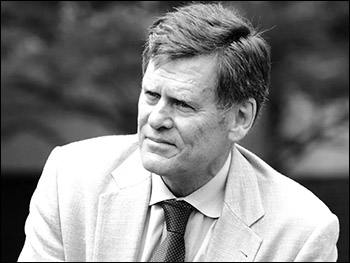
A cursory online search for Harvard-educated attorney and environmental leader Jonathan Lash will generate a list of accolades illustrious enough to impress the most celebrated academic. The accompanying images match.
Either donning academic regalia, or a sharp blazer with an oxford shirt and neat tie, Lash exudes a quiet confidence. A climate change and global sustainability expert, Lash has tirelessly lobbied for solutions to our disappearing environmental resources.
But, beyond his role as a former college president as well as president of the World Resources Institute, Lash has now expanded his scope of influence into the fictional world.
While he is no stranger to scholastic writing, Lash’s inaugural book of fiction, What Death Revealed: A Story of Vice, Virtue, and Violence, is a murder mystery that is guaranteed to be as captivating as his career.
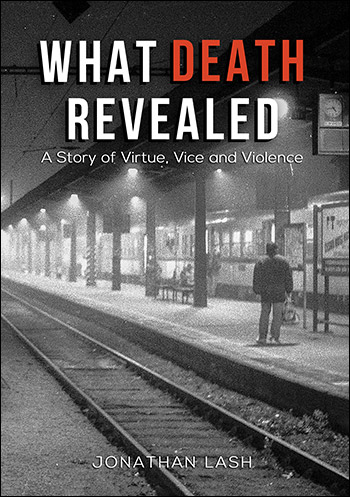
Even though he is (without a doubt) exceptional and erudite, Lash is quietly humble. He quickly glosses over his accomplishments and goes so far as to call himself a “neophyte” when it comes to fictional writing.
But, it is his understated and transparent nature that makes Lash instantly likeable, just like the characters in his book. Like author, like protagonist.
How did you become involved in the world of environmental sustainability?
I’ve always enjoyed the outdoors. In the late 1960s, pollution was out of control, and that made me angry. I went to law school and I wanted to be involved in fighting to protect the environment.
Was that uncommon at the time, to go into that field?
Not for progressives it wasn’t. I remember Earth Day being one of the first massive nationwide demonstrations that included people from all different viewpoints.
I didn’t realize Earth Day was originally a demonstration! They never taught us that in school.
It wasn’t like the anti-war demonstrations, though. It was festive, but active.
What made you decide to write your first work of fiction at this stage in your life? Have you always loved writing?
I came to this love of writing genetically. My father was a Pulitzer Prize-winning author, and insisted I become a writer when I could barely read. I think he would be prouder of this book than all the things I’ve ever done.
He had been a newspaper man but became a historian late in life. Once he completed his research and was ready to write, he’d get up at 4 am and write a chapter before breakfast.
He didn’t have an electric typewriter. He did everything using a manual typewriter. He learned to sit and write, no corrections, no brooding or dreaming. By 8 am, he’d be finished with a chapter.
I wrote scores of articles published in everything from the Harvard Business Journal to the local paper where I lived in Vermont.
Writing this book was a complete accident. I had just retired as the president of a college and was poking around wondering what to do in my retirement.
A friend of mine, who had just published a book of poetry, told me he was in a writer’s group. It turned out the group was led by somebody who had been a freshman at the place where I went to prep school when I was a senior.
What a small world!
Yes. I was having a great time, doing writing exercises. One morning, he gave us an assignment to write a dark scene. Something out of my experiences as a prosecutor came to mind: Sitting in a dingy dark office processing arrests for cops who had been out all night.
These three vice squad detectives came in, very tired, very jaded, and not at all interested in spending time with a bright-eyed, idealistic, naïve young prosecutor.
That led to some pretty interesting exchanges. One of them was with this formidable black, bearded sergeant who got pissed off at me for asking so many questions.
I wrote about that scene, just as much as I told you. I read it in my writing group, and someone said, “That sounds like the beginning of a book.”
From there, the characters just started inhabiting my head. My imagination was bubbling and I began writing without any clear ideas of where the narrative was going. It was as if the characters had been waiting to tell the story. I had such a ball.
My wife is sitting next to me right now and she’s smiling and nodding. I loved it.
How long did it take you to write your book?
The first draft took me about nine months and I thought I was finished. As anyone who writes a first novel knows it didn’t work that way.
Editors and advisors had different ideas: 50% shorter they said, and “Why doesn’t a murder take place on the first page?” And so it was another year and a half of miserable struggles trying to make sure I remembered what the book was about.
Tell us about What Death Revealed.
There’s this character in the book [Larry Williams], and he’s this big, tough sergeant. His best friend is executed in front of his family. The sergeant goes mad. He’s utterly distraught and bent on avenging his friend.
His patrol partner finds this young prosecutor [Jimmy McFarland] and says to him, “You’ve got to help me keep Sarge from doing something awful. Don’t let him go vigilante.”
They end up working together to figure out what happened. The sergeant is jaded and doesn’t believe justice can be had, while the naïve, young prosecutor is convinced justice is necessary and achievable. Their dynamic presents this nice juxtaposition in the story.
How would you describe your book?
It is a classic murder mystery, a suspense novel. It is set in Washington DC, in the mid 1970s, right after President Carter is elected, when the gleaming capitol of the free world had (behind the scenes) an impoverished, segregated city that was mostly black and in ruins after the riots following the Martin Luther King assassination.
In that setting the city was building a subway system, the largest public works project they’d ever built.
As Sarge and the young prosecutor McFarland begin their quest to find out how his friend got killed, they stumble on three more murders, massive corruption – millions stolen from the Metro project, and brutal racism.
Are you McFarland?
No, I share some things with McFarland, but the story is totally made up. It’s not a memoir in disguise. The characters and events are imagined… informed by events, but the basic plot didn’t happen.
I’ve never heard an author use the phrase a “memoir in disguise.” Usually, the protagonists seem to be a reflection of the author. In any case, how do you think you evolved as a prosecutor? I know you started off as hopeful, but how were you at the end of your career? Did you become more like the Sarge?
No. I remained an idealist all the way through. That’s why I went on to environmental work. I’m still an optimist even though I know more about climate change than most of the people on earth.
I do, however, recognize that I was practicing in a time when the city was just embroiled in terrible racism. It was all around me and I was clueless about it.
I really appreciate you saying that. Not many authors say that as well.
That’s something I’ve looked back on and discovered in hindsight.
What do you hope your readers take away from your book?
First of all, I hope they enjoy it. I do think this theme of “What is justice and who gets it?” is an important theme. It’s argued out between the two protagonists.
They’re really attractive characters and I hope that leads people to think about these questions because those questions are still relevant to this day.
Who would you cast as the leading characters in What Death Revealed?
I admit I’m not a good moviegoer. I got my son-in-law to suggest a few names.
Young Ethan Hawke would be great as the prosecutor.
As for the Sarge. Well, he was raised in the south by his grandparents who forced him to go to church. He played football in college and was drafted for Vietnam.
I suppose Denzel is a little too happy for the Sarge?
I can’t think of the name of that actor I had in mind right now.
How about Forest Whitaker?
That sounds about right.
Do you have any upcoming projects you’d like the world to know about?
I’m a quarter of the way through the sequel. It’s not going quite so easily, but I’m still loving doing it. I’ve written a couple of short stories, and they’re posted on my website.
Is that what you have planned for the rest of the summer?
I’m an avid fly fisherman, so I imagine there will be plenty of that in September. And also fending away the yard rodents. The squirrels are incorrigible. I’m praying for a resurgence of large, flying predators.
For more information, please visit www.JonathanLash.com.
Lash’s book, What Death Revealed, can be found on Amazon.
Home |
Actors/Models |
Art |
Books |
Dining
Film & Video |
Food & Wine |
Health & Fitness
MediaWatch |
Money and Business |
Music |
Profiles
Professional Services |
Sports |
Style & Fashion
Technology |
Theatre |
Travel & Leisure
Copyright 1995 - 2026 inmag.com
inmag.com (on line) and in Magazine (in print)
are published by in! communications, Inc.
www.inmag.com
|


Advertiser Info
Subscription Form
Contact Us
|

